

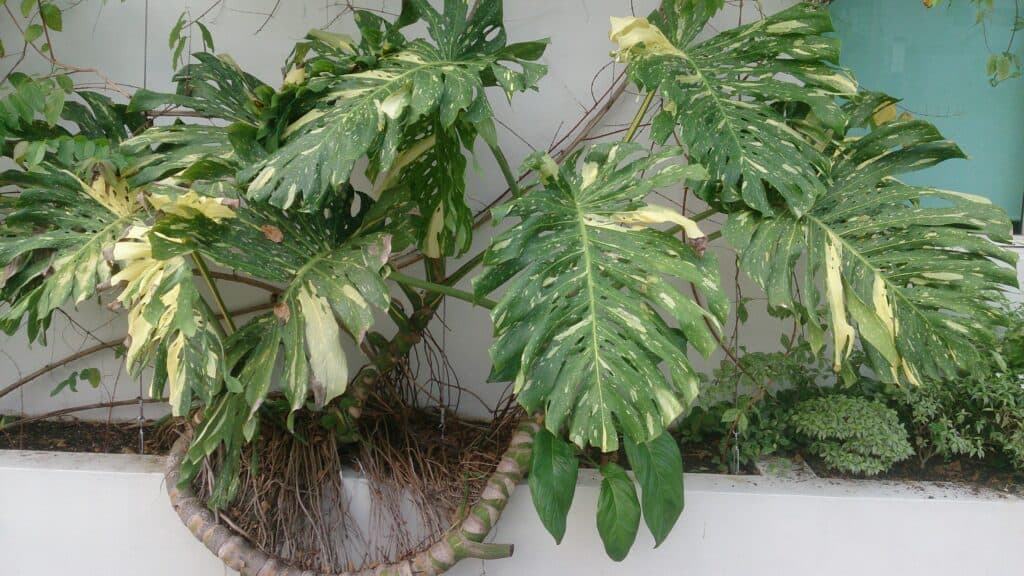
If you’ve been wondering how to care for Monstera Thai Constellation, you’re in the right place! I got my first Thai Constellation a couple of years ago and honestly fell head over heels for it. Those creamy white and green variegated leaves are just stunning, and there’s nothing quite like watching a new leaf unfurl with all that gorgeous patterning. How to Care for Monstera Thai Constellation: the Complete Indoor Growing Guide is a popular choice for gardeners.
The Thai Constellation is a lab-created variety of Monstera deliciosa, originally developed in Thailand (hence the name!). It’s a little more demanding than your average houseplant, but once you understand what it needs, it’s really not that hard to keep happy. Let me walk you through everything I’ve learned.
Light and Temperature: Getting the Basics Right for Your Monstera Thai Constellation
Light is honestly the biggest thing to get right with this plant. Thai Constellations need bright, indirect light to thrive. Too little light and the variegation fades, which is heartbreaking when that’s the whole reason you fell in love with the plant! I keep mine about four to six feet from a south-facing window, and it’s doing beautifully.
Direct sun is a no-go though. I made that mistake early on and ended up with crispy brown patches on a few leaves. Filtered light through a sheer curtain works perfectly if your windows get intense afternoon sun.
Here in Florida, our light is intense even indoors, so I’m always careful about this. If you’re in a sunnier climate like me, err on the side of keeping it a bit further from the window rather than closer.
Temperature-wise, Thai Constellations like it warm, between 65 and 85 degrees Fahrenheit. That’s one reason they do so well as houseplants in Florida! Just keep them away from air conditioning vents, because cold drafts will stress them out fast.
How to Care for Monstera Thai Constellation: Watering and Soil Tips
Related article: Fiddle Leaf Fig Care: My Complete Guide to Keeping Yours Happy
Getting the watering right is where a lot of people struggle. I use the finger test every single time. I stick my finger about two inches into the soil, and if it feels dry, it’s time to water. If it still feels damp, I wait another day or two and check again.
Overwatering is the number one way to kill a Thai Constellation. The roots will rot, and once that happens, it’s really hard to save the plant. I learned this the hard way with a different Monstera, and I never want to go through that again!
For soil, you want something that drains really well. I mix regular potting soil with perlite and a little orchid bark. This keeps the roots from sitting in soggy soil while still holding enough moisture to keep the plant happy. You can find good houseplant care guidance from the University of Florida IFAS Extension if you want to read more about soil mixes for tropical plants.
Make sure your pot has drainage holes. This is non-negotiable! I always put a saucer underneath but empty it out after watering so the roots aren’t sitting in standing water.
Humidity, Fertilizing, and the Complete Indoor Growing Guide for Thai Constellation
Thai Constellations are tropical plants, so they love humidity. They’re happiest when humidity is around 60 to 80 percent. In Florida, our outdoor humidity is naturally high, but indoors with the AC running, it can get pretty dry.
I run a small humidifier near my plant, and it’s made a huge difference. You can also group plants together to create a little microclimate, or set the pot on a tray filled with pebbles and water. Just make sure the bottom of the pot isn’t actually sitting in the water.
For fertilizing, I feed my Thai Constellation once a month during spring and summer with a balanced liquid fertilizer diluted to half strength. I skip fertilizing in fall and winter when the plant’s growth naturally slows down. You don’t want to push growth when the plant is resting. According to general information about Monstera deliciosa, these plants are naturally vigorous growers, so a little fertilizer goes a long way.
Don’t over-fertilize! Too much fertilizer builds up salts in the soil and can burn the roots. Less is definitely more here.
Repotting, Propagation, and Common Problems to Watch For
Thai Constellations grow slowly compared to regular Monsteras, so you won’t need to repot super often. I repot mine every two years or so, or when I see roots poking out of the drainage holes. Go up just one pot size at a time so the roots don’t get overwhelmed by too much soil.
Propagation is a fun way to get more plants or share with friends! The easiest method is stem cuttings. You want a cutting with at least one node (that little bump on the stem where roots grow from). Pop it in water or moist sphagnum moss and wait for roots to develop. It can take a few weeks to a couple of months, so be patient!
Pests are something to watch for, especially in Florida’s warm climate. Spider mites, mealybugs, and scale insects all love Monsteras. I check my plants every time I water, looking under the leaves and along the stems. If I spot anything, I wipe the leaves down with neem oil or insecticidal soap right away before it spreads.
Brown leaf tips usually mean low humidity or inconsistent watering. Yellow leaves often mean overwatering. Once you know what to look for, troubleshooting gets a lot easier!
Taking care of this plant is so rewarding once you get into a good routine. The leaves just keep getting bigger and more spectacular over time. I genuinely get excited every time I see a new leaf starting to unfurl!
If you’re ready to try how to care for Monstera Thai Constellation yourself, just start with good light, well-draining soil, and careful watering. You’ve totally got this, and I’m cheering you on every step of the way!
