

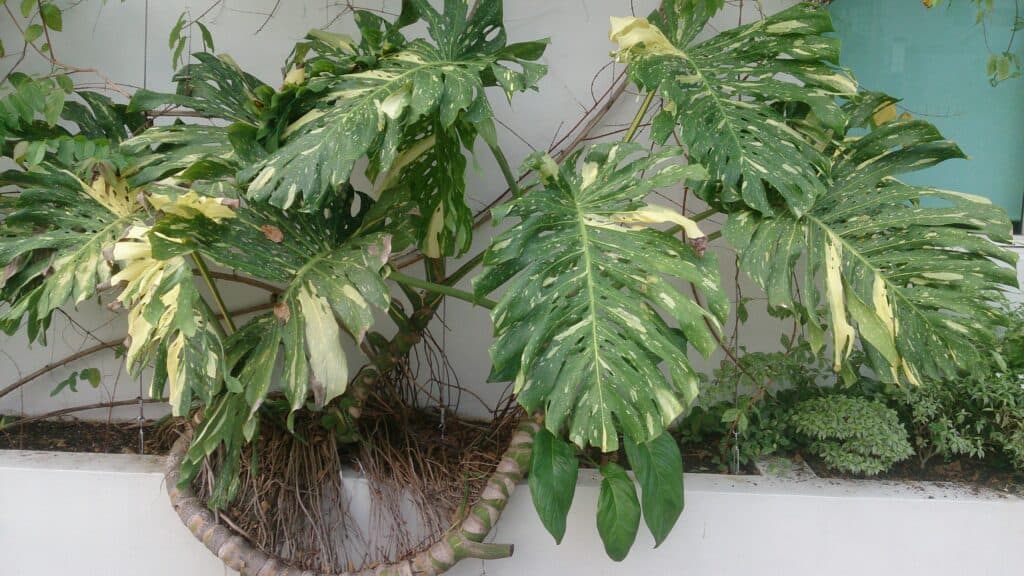
If you’ve been wondering how to care for Monstera Thai Constellation (light, watering, soil & propagation), you are in for such a treat. This plant is honestly one of the most beautiful things I’ve ever grown, and I say that as someone who has a lot of plant opinions. Those creamy white splashes on deep green leaves are just stunning, and every single leaf looks different from the last. How to Care for Monstera Thai Constellation (light, Watering, Soil & Propagation) is a popular choice for gardeners.
I got my first Thai Constellation a few years ago, and I’ll be honest, I was a little nervous. These plants have a reputation for being pricey and a bit fussy. But once I figured out what they actually need, it turned out to be way more manageable than I expected!
How to Care for Monstera Thai Constellation: Getting the Light Right
Light is probably the biggest thing to get right with this plant. Thai Constellations need bright, indirect light to really thrive. I keep mine about 3 to 4 feet back from a south-facing window, and it’s absolutely loving life there.
Here’s the thing about those beautiful white patches on the leaves: they don’t have chlorophyll, which means they can’t absorb light the way the green parts can. So this plant actually needs more light than a regular Monstera deliciosa to stay healthy and keep growing well.
Direct sun is a no-go though. If you put it right in a sunny window, those pale patches will burn fast and turn brown. I learned that the hard way with one of my other variegated plants, and it was heartbreaking.
In Florida, our light is intense even indoors. I use a sheer curtain to filter the light coming through my window, and it makes a huge difference. If you don’t have a good bright spot, a grow light set to about 12 hours a day works great too.
Watering and Soil Tips for Monstera Thai Constellation Care
Related article: How to Grow Artemisia Vulgaris
Getting the watering right is where a lot of people go wrong with this plant, and I totally get it. The Thai Constellation likes to dry out a bit between waterings, but it doesn’t want to go completely bone dry either. I use the finger test every single time: I stick my finger about 2 inches into the soil, and if it still feels damp, I leave it alone.
When it is time to water, I water thoroughly until it drains out the bottom of the pot. Then I let it drain completely before putting it back in its spot. Sitting in water is a fast track to root rot, and that’s one problem you really don’t want to deal with.
Soil matters so much here too. I mix my own by combining regular potting mix with perlite and a little orchid bark. It sounds fancy, but you can find all of these at any garden center. This combo drains really well and keeps the roots happy and aerated.
In Florida’s humidity, I actually water mine a little less often than the general guidelines suggest. Our air holds so much moisture that the soil stays damp longer than it would in a drier climate. Keep an eye on your specific conditions rather than watering on a strict schedule. UF/IFAS Gardening Solutions has some great general guidance on tropical plant care in our climate if you want to dig deeper.
How to Propagate Monstera Thai Constellation Successfully
Okay, so propagation is where things get really exciting, and also where people get a little scared because this plant is expensive. I totally understand the hesitation! But propagating a Thai Constellation is very doable once you know what you’re doing.
The best method is stem cuttings with at least one node. The node is that little bump or joint on the stem where a leaf and aerial root grow from. You need at least one node on your cutting, or it simply won’t grow. I always aim for a cutting that has one node, one leaf, and a little aerial root nub if possible.
Once you have your cutting, you can root it in water, sphagnum moss, or a light soil mix. I personally love using sphagnum moss because it holds moisture without being too wet, and you can actually see the roots developing through the sides of a clear cup. It feels like magic watching those little white roots appear!
Keep your cutting in a warm, humid spot with bright indirect light. Here in Florida, I sometimes just set mine on a covered patio during the warmer months and the humidity does half the work for me. Patience is key though: rooting can take anywhere from 4 to 8 weeks. Don’t give up if it seems slow! You can read more about Monstera propagation basics on Wikipedia for some helpful background info.
Keeping Your Thai Constellation Happy Long-Term
Once your plant is established and growing, there are a few extra things that will keep it looking gorgeous for years. Humidity is a big one. Thai Constellations love humidity levels around 60% or higher. In Florida, we’re often naturally in that range outdoors, but indoor air conditioning can dry things out a lot.
I run a small humidifier near my plant collection during the summer months when the AC is cranking. A pebble tray filled with water under the pot also helps add a little moisture to the air around the plant. Misting is okay occasionally, but it doesn’t do much on its own.
Fertilizing during the growing season (spring through summer) gives your plant a real boost. I use a balanced liquid fertilizer diluted to half strength about once a month. I skip fertilizing entirely in fall and winter when the plant naturally slows down.
Watch out for common pests like spider mites, thrips, and scale. I check the undersides of leaves every time I water, which makes it easy to catch anything early. Wiping leaves down with a damp cloth every few weeks also helps keep pests away and keeps those beautiful leaves looking shiny and clean.
Growing this plant really is such a rewarding experience. Once you get the basics down, it’s not nearly as intimidating as its price tag might suggest! If you’re still figuring out how to care for Monstera Thai Constellation (light, watering, soil & propagation), just take it one step at a time and trust the process.
You’ve got this, and your Thai Constellation is going to be absolutely gorgeous. Feel free to drop any questions in the comments below, I love chatting plants with you all!
