

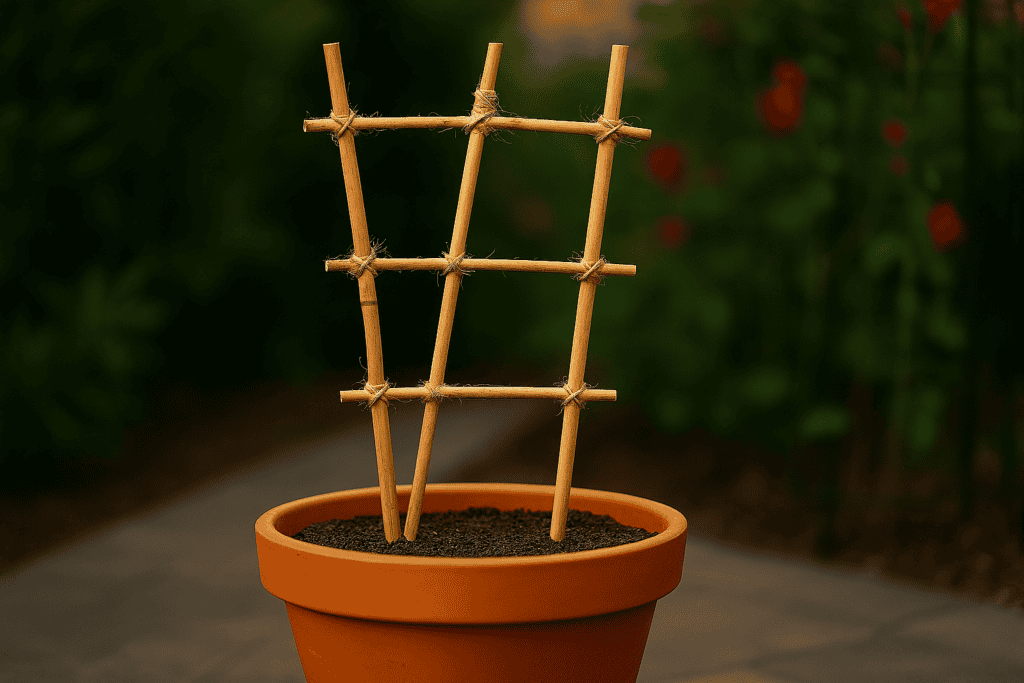
Creating a simple planter trellis is one of my favorite weekend projects because it instantly transforms any container garden into a vertical growing space. Whether you’re dealing with limited patio space or just want to add height and structure to your planters, a basic trellis opens up so many possibilities for growing climbing vegetables, flowering vines, and trailing plants. I started making my own trellises when I realized how expensive the store-bought ones were, and honestly, the homemade versions work just as well and look way more personal.
Why Every Container Gardener Needs a Simple Planter Trellis
A simple planter trellis completely changes what you can grow in containers. I used to think I was limited to compact plants in my pots, but once I started adding vertical support, I could grow pole beans, cucumbers, morning glories, and even small melons in the same space. The trellis basically doubles or triples your growing area without taking up more floor space on your patio or deck.
Here in Florida, I especially love using trellises for heat-loving vines that actually prefer growing up rather than sprawling across the ground. Plants like passion vine, bougainvillea, and jasmine absolutely thrive when they have something to climb. The vertical growth also improves air circulation around the plants, which helps prevent fungal issues that can be a problem in our humid climate.
The beauty of a homemade trellis is that you can customize it to fit your exact container size and the specific needs of what you’re growing. I make shorter ones for herbs like oregano that like to trail, medium-height ones for beans and peas, and tall ones for vigorous climbers like moonflowers that can reach 10 feet in a single season.
Materials and Tools for Your DIY Planter Trellis
You might also enjoy: Growing Purple Shamrock Success!
You don’t need fancy tools or expensive materials to build a functional simple planter trellis. I keep my designs basic because complicated structures often fall over or break in strong winds, which we definitely get plenty of here in Florida. My go-to materials are bamboo stakes, garden twine, and sometimes a few zip ties for extra stability.
For a basic trellis, grab three to five bamboo stakes that are at least 6 feet tall. I buy mine in bulk from the garden center because they’re cheap and naturally weather-resistant. You’ll also need strong garden twine or thin rope. I prefer natural jute twine because it looks nice and eventually breaks down if I want to compost it, but synthetic rope lasts longer if you want to reuse the trellis next season.
The only tools you really need are scissors to cut the twine and maybe a small drill if you want to make holes in a wooden planter for extra stability. I’ve built dozens of these trellises with just my hands and a pair of scissors. The key is keeping it simple so you’ll actually follow through and build it instead of putting it off because it seems too complicated.
Step-by-Step Guide to Building Your Simple Planter Trellis
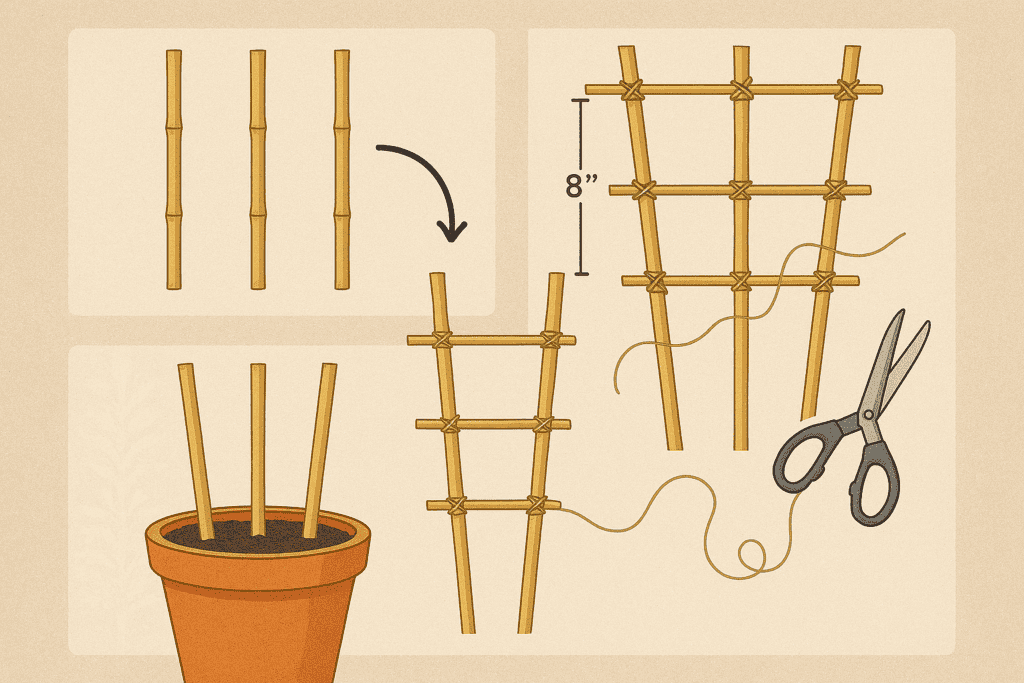
Start by pushing your bamboo stakes deep into the potting soil around the edges of your container. I space them evenly and push them down at least 6 inches into the soil, sometimes more if I’m growing heavy plants like tomatoes or squash. The stakes should feel solid and not wiggle when you give them a gentle shake.
Next, create the horizontal support lines by tying your twine from stake to stake. I start about 8 inches from the bottom of the stakes and work my way up, spacing the horizontal lines about 6 to 8 inches apart. Don’t worry about making it perfectly straight or even. Plants don’t care if your lines are a little crooked, and honestly, the slightly imperfect look is more charming than a rigid store-bought trellis.
For extra climbing support, I sometimes add diagonal lines or create a crosshatch pattern between the horizontal supports. This gives twining plants like beans and morning glories more places to grab onto as they climb. I learned this trick after watching my cucumber vines struggle to find enough support on a simple horizontal-line trellis.
The whole project usually takes me about 15 minutes per planter, and that includes stopping to admire my work and maybe relocating the planter to the perfect spot. Once your plants start growing, you might need to add more horizontal lines as they climb higher, but that’s easy to do with just a few more pieces of twine.
Caring for Plants on Your Trellis System
Plants growing on trellises need a little different care than those growing in regular containers. The main thing I’ve learned is that they dry out faster because there’s more air circulation around the leaves and stems. I check my trellised containers every day during hot weather and usually end up watering them more frequently than my other pots.
Wind can be both a blessing and a challenge for trellised plants. The increased airflow helps prevent diseases, but strong winds can damage tender vines or even blow over lightweight containers. I solve this by using heavier pots or adding weight to the bottom with rocks or bricks. During hurricane season here in Florida, I sometimes have to move my trellised containers to more protected spots.
Training your plants to use the trellis takes a little patience at first. Most vining plants will find the support naturally, but sometimes I gently weave young stems through the twine to get them started. Once they get the idea, they’ll climb on their own. I check on them every few days and redirect any wayward stems that are trying to climb neighboring plants instead of their designated trellis.
Don’t forget that plants growing vertically cast shadows, so consider how this affects other plants in your garden. I’ve accidentally shaded out some sun-loving flowers by placing a tall bean trellis in the wrong spot. Now I think about the sun’s path before deciding where to put my tallest trellises.
Building your own simple planter trellis is honestly one of the most satisfying and practical projects you can tackle as a container gardener. Every time I look at my climbing beans or flowering vines reaching toward the sky, I feel proud of creating that vertical growing space with just a few bamboo stakes and some twine. The best part is that you can experiment with different designs and sizes until you find what works perfectly for your space and your favorite climbing plants.
