

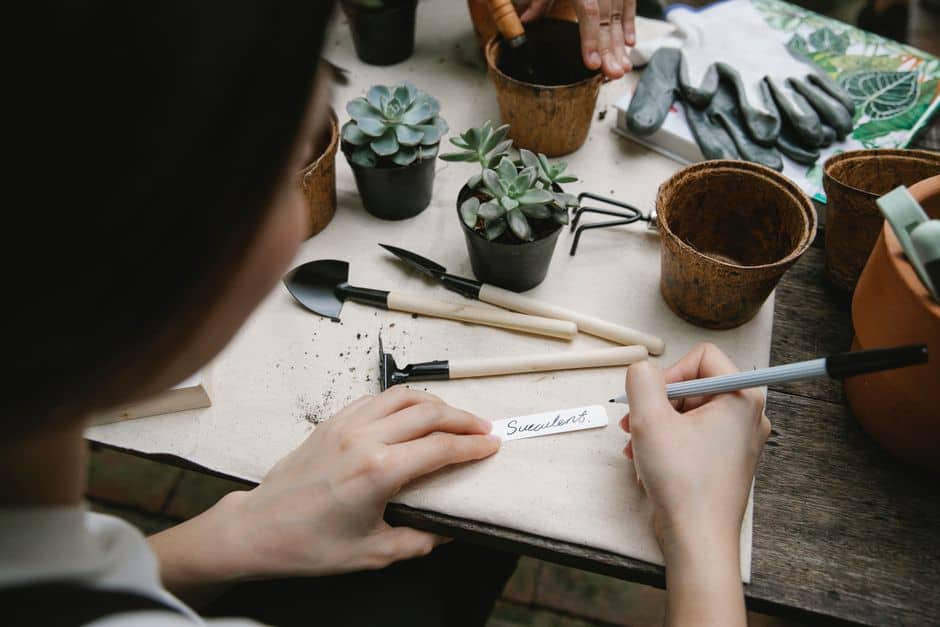
If you’ve ever wanted to multiply your succulent collection for free, learning how to propagate succulents from leaf cuttings is honestly one of the most satisfying things you can do as a gardener. I still remember the first time I tried it and watched those tiny pink roots appear out of nowhere. It felt like actual magic! “how to Propagate Succulents From Leaf Cuttings” is a popular choice for gardeners.
The best part is that it’s way easier than most people think. You don’t need fancy equipment, special skills, or even much space. Just a few leaves, some patience, and a little know-how will get you there.
How to Propagate Succulents From Leaf Cuttings: Getting Started
The first thing you need to do is choose the right leaves. Healthy, plump leaves work best, so skip any that look shriveled, damaged, or discolored. I always go for the lower leaves on the stem, gently twisting them off with a slight wiggle until they snap off clean at the base. That clean break at the base is really important because a leaf with a torn or partial base usually won’t root at all.
Not every succulent propagates well from leaves, so it helps to know which ones work best. Echeverias, sedums, and graptopetalums are my personal favorites for leaf propagation because they root so reliably. Ghost plants and jelly bean sedums are also fantastic choices. If you want to learn more about which succulent varieties are best suited for your area, the University of Florida IFAS Extension has a great succulent guide worth bookmarking.
Once you have your leaves, lay them out on a dry paper towel for a day or two. This lets the broken end “callous over,” which basically means a little protective layer forms where the leaf was attached. Skipping this step is one of the most common beginner mistakes, and it leads to rot instead of roots.
The Best Soil and Setup to Propagate Succulents From Leaf Cuttings
For more gardening tips, check out: How to Propagate Succulents
Succulents absolutely hate sitting in wet soil, so the mix you use makes a huge difference. I use a cactus and succulent potting mix, sometimes blending in a little extra perlite to help with drainage. A 50/50 mix of regular potting soil and perlite works great too if that’s what you have on hand.
Lay your calloused leaves flat on top of the soil. Don’t bury them or push them in. Just set them on the surface and let them do their thing. The roots will naturally reach down into the soil on their own, which is pretty cool to watch happen over time.
Here in Florida, I keep my propagation trays in a bright spot with indirect light. Direct afternoon sun in our climate is way too intense and will fry those tiny new leaves before they even get started. A shaded patio or a bright windowsill works perfectly.
Mist the soil lightly every few days to keep it barely damp. You’re not watering heavily here, just giving the roots enough moisture to get going. Think of it as a light spritz rather than a full drink.
What to Expect When You Propagate Succulents From Leaf Cuttings
Patience is your best friend during this process! You’ll usually start seeing tiny pink or white roots popping out within two to four weeks. After that, little rosette babies will begin forming at the base of the leaf. It’s honestly one of the cutest things in gardening.
The original leaf will slowly shrivel up as the baby plant uses its energy to grow. Don’t panic when this happens because it’s completely normal. Once the mother leaf has fully shriveled and the baby has a few of its own roots, you can gently remove the dried leaf and pot up your new little succulent.
In Florida’s warm climate, propagation tends to move a bit faster than in cooler states, which is one of the perks of gardening here. Spring and early fall are my favorite times to propagate because the temperatures are warm but not brutally hot. Summer works too, but keep everything out of direct sun and watch for excess humidity causing rot.
For more general care info on succulents, Wikipedia’s succulent plant page gives a solid overview of how these plants store water and why they thrive with minimal care.
Common Mistakes and How to Avoid Them
The number one mistake I see beginners make is overwatering. It’s so tempting to water more when you’re eager to see results, but too much moisture will rot those little leaves before they ever get a chance to root. Stick to light misting and resist the urge to drench the soil.
Another thing that trips people up is using leaves that didn’t break off cleanly. If the base of the leaf is damaged or torn, it just won’t propagate successfully. Go back and try again with a clean snap from a healthy stem, and you’ll have much better results.
Some leaves also just won’t make it, and that’s totally okay. I always propagate way more leaves than I actually need because some will root and some won’t. Expect maybe a 50-70% success rate, especially when you’re first starting out. Even experienced gardeners don’t get 100% every time!
Finally, don’t rush the potting-up stage. I’ve made the mistake of moving babies into their own pots too early, before their roots were strong enough. Wait until your new plant has a solid little root system and a rosette that’s at least half an inch across before giving it its own home.
Learning how to propagate succulents from leaf cuttings is one of those skills that completely changes how you see your plant collection. Suddenly every single leaf is a potential new plant, and your collection can grow without spending a dime. I’ve given away hundreds of little succulent babies to friends and neighbors over the years, and it never gets old.
So grab a few leaves from your favorite succulent today and give it a try! You might be surprised how quickly you go from one plant to a whole tray full of adorable little rosettes.
