

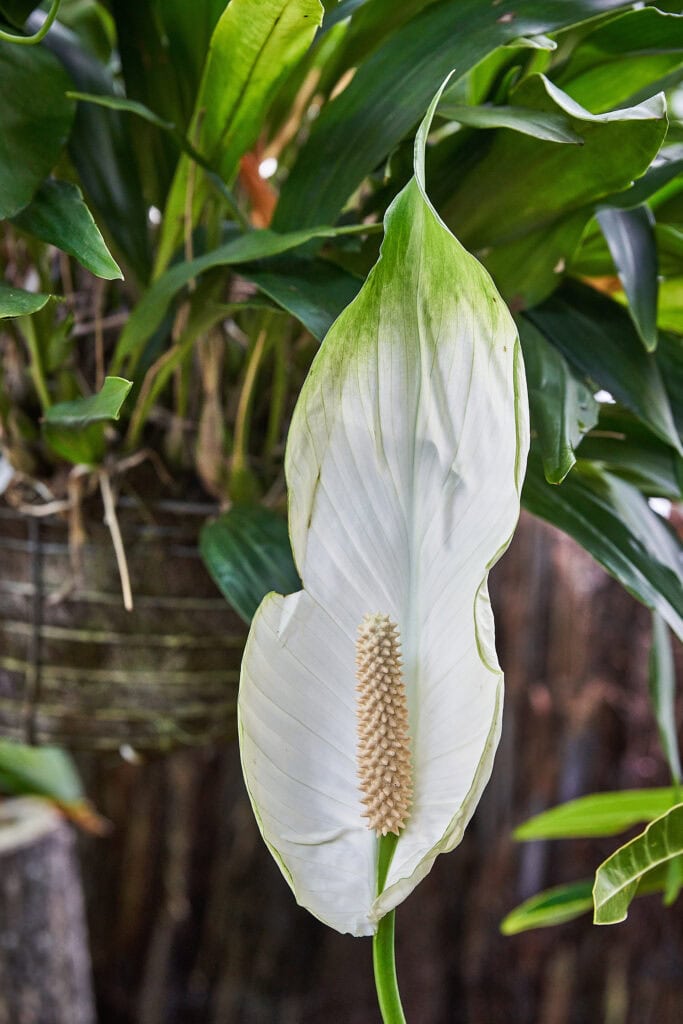
Peace lily care tips are something I get asked about all the time, and for good reason! These gorgeous plants with their elegant white blooms and glossy green leaves are absolute showstoppers in any home. I’ve been growing peace lilies for years here in Florida, and they’ve become one of my favorite low-maintenance houseplants.
What I love most about peace lilies is how they literally tell you what they need. When they’re thirsty, they droop dramatically like they’re putting on a show. When they’re happy, those stunning white flowers appear like little flags of victory. It’s like having a plant that speaks your language!
Essential Peace Lily Care Tips for Beginners
Let me share the peace lily care tips that have worked best for me over the years. First up is lighting, which is probably the easiest part of caring for these beauties. Peace lilies absolutely love bright, indirect light, which makes them perfect for most indoor spaces.
I keep mine about six feet away from my south-facing windows, and they’re thriving. Direct sunlight will actually scorch their leaves, turning them yellow and crispy. I learned this the hard way when I first started growing them and placed one right on my windowsill. The poor thing looked like it had been through a battle!
The beauty of peace lilies is that they’ll tolerate lower light conditions too. I have one in my bathroom that gets mostly artificial light, and it’s been happy there for three years. The flowers might not be quite as frequent in lower light, but the plant stays healthy and gorgeous.
Here in Florida’s humidity, I rarely worry about adding extra moisture to the air. But if you’re in a drier climate or running air conditioning constantly, your peace lily will appreciate a humidity tray or regular misting.
Watering Your Peace Lily the Right Way
Also read: How to Grow Strawberries in Florida
This is where those peace lily care tips really come in handy, because watering is both the easiest and trickiest part of care. Peace lilies are dramatic little things when it comes to water. They’ll literally flop over and look like they’re dying when they need a drink, then perk right back up within hours of watering.
I use this drooping as my watering signal rather than sticking to a rigid schedule. Usually, this happens about once a week during our hot Florida summers, and maybe every 10 days in winter when the air conditioning isn’t running as much. The key is to water thoroughly until you see water draining from the bottom holes.
Never let your peace lily sit in standing water, though. I learned this lesson when I killed my first one by being too attentive with watering. The roots rotted, and the whole plant turned mushy and gross. Now I always empty the drainage tray about 30 minutes after watering.
The quality of water matters too. Peace lilies are sensitive to chemicals in tap water, especially fluoride and chlorine. I either use filtered water or let tap water sit out overnight before using it. This simple step has made a huge difference in keeping my plants happy and preventing those brown leaf tips that can make them look sad.
Perfect Peace Lily Care Tips for Soil and Feeding
Getting the soil right is one of those peace lily care tips that makes everything else easier. These plants need well-draining potting mix that still holds some moisture. I use a regular houseplant potting soil mixed with a bit of perlite for extra drainage.
The soil should feel like a wrung-out sponge, moist but not soggy. I stick my finger about an inch into the soil to check. If it feels dry at that depth, it’s time to water. If it’s still moist, I wait another day or two.
Peace lilies aren’t heavy feeders, which is great news for busy plant parents. I fertilize mine with a balanced liquid houseplant fertilizer diluted to half strength once a month during spring and summer. In fall and winter, I skip the fertilizer completely since the plants naturally slow down their growth.
Over-fertilizing is actually worse than under-fertilizing with peace lilies. Too much fertilizer can cause salt buildup in the soil, leading to brown leaf tips and stunted growth. I made this mistake early on by thinking more food would mean more flowers. Instead, I got crispy, unhappy plants that took months to recover.
Common Problems and How to Fix Them
Even with the best peace lily care tips, you might run into some issues. Brown leaf tips are probably the most common problem I see. This usually means either too much fluoride in your water, low humidity, or over-fertilizing. Switching to filtered water and cutting back on fertilizer usually solves this.
Yellow leaves are another common concern, but don’t panic! Older leaves naturally turn yellow and die off as the plant grows. Just trim them off at the base with clean scissors. If you’re seeing lots of yellow leaves all at once, you might be overwatering or the plant might be getting too much direct sun.
No flowers can be frustrating, especially when you bought the plant specifically for those beautiful white blooms. Peace lilies typically need to be at least a year old to flower, and they bloom best when they’re slightly pot-bound. If your plant is happy but not flowering, try waiting it out or moving it to slightly brighter light.
Pests aren’t usually a big problem with peace lilies, but I occasionally see spider mites or aphids. A gentle shower in the sink followed by wiping the leaves with a damp cloth usually takes care of minor infestations. For stubborn pests, I use insecticidal soap following the package directions.
These peace lily care tips have served me well over the years, and I’m confident they’ll help you grow beautiful, thriving plants too. Remember, peace lilies are forgiving plants that actually communicate their needs pretty clearly once you learn to read their signals.
Don’t be discouraged if you make mistakes along the way. I’ve killed my share of peace lilies while learning these care tips, and each failure taught me something valuable. With a little patience and attention, you’ll have gorgeous, blooming peace lilies that bring joy to your home for years to come!
