

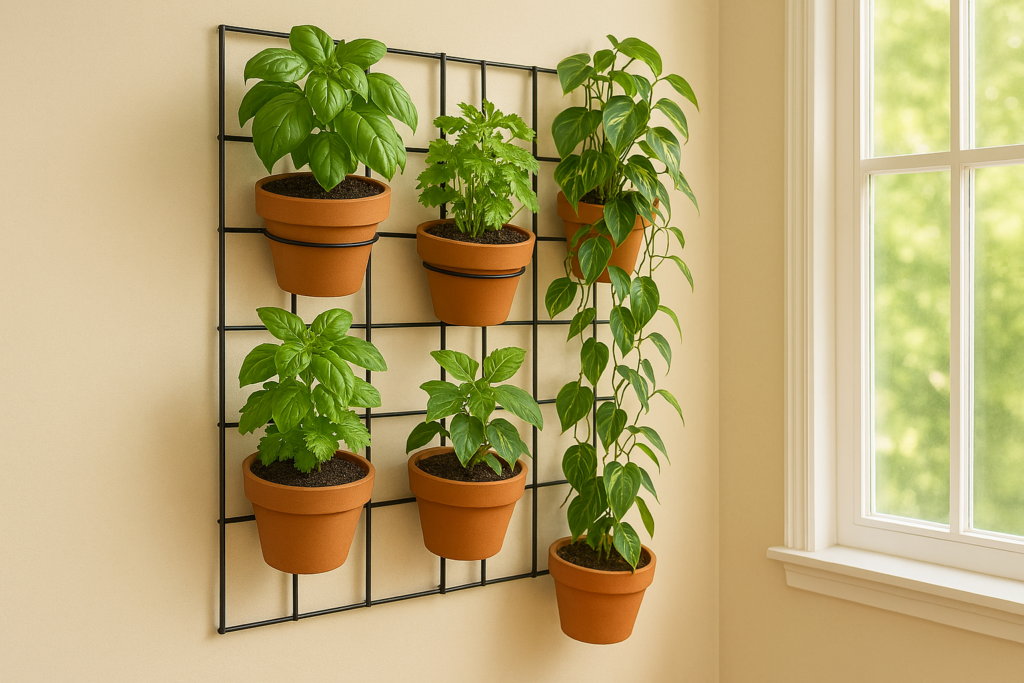
Learning how to start a vertical garden indoors is one of the best ways to grow more plants when you’re short on space. I’ve been growing vertically in my Florida home for years, and it’s amazing how much you can fit in just a few square feet! Whether you want fresh herbs for cooking or beautiful houseplants to brighten your rooms, vertical gardening lets you have it all.
Vertical gardens work especially well indoors because you can control the light, temperature, and watering perfectly. Plus, they look absolutely gorgeous and turn any boring wall into a living piece of art. I love how my vertical herb garden makes my kitchen smell amazing and gives me fresh basil and mint whenever I need it.
Choosing the Right System for Your Vertical Garden Indoors
When I first started learning how to start a vertical garden indoors, I was totally overwhelmed by all the different systems out there. The good news is that you don’t need anything fancy to get started! I began with simple wall-mounted planters that cost less than $30, and they worked beautifully.
Pocket planters are my absolute favorite for beginners. These fabric or plastic organizers hang on your wall and have individual pockets for each plant. I use them for herbs and small greens, and they’re perfect because each plant gets its own space. You can find them at any garden center or online.
If you want something more permanent, consider a trellis system with small pots. I have one in my living room with pothos and philodendrons, and it’s become a real conversation starter. The plants climb up the trellis naturally, creating this gorgeous green wall effect.
For those who love technology, hydroponic towers are incredible but definitely more of an investment. My neighbor has one, and her lettuce grows faster than anything I’ve ever seen! But honestly, you can have amazing success with basic soil-based systems too.
Best Plants for Starting Your Indoor Vertical Garden
You might also enjoy: How to Grow Strawberries in Florida
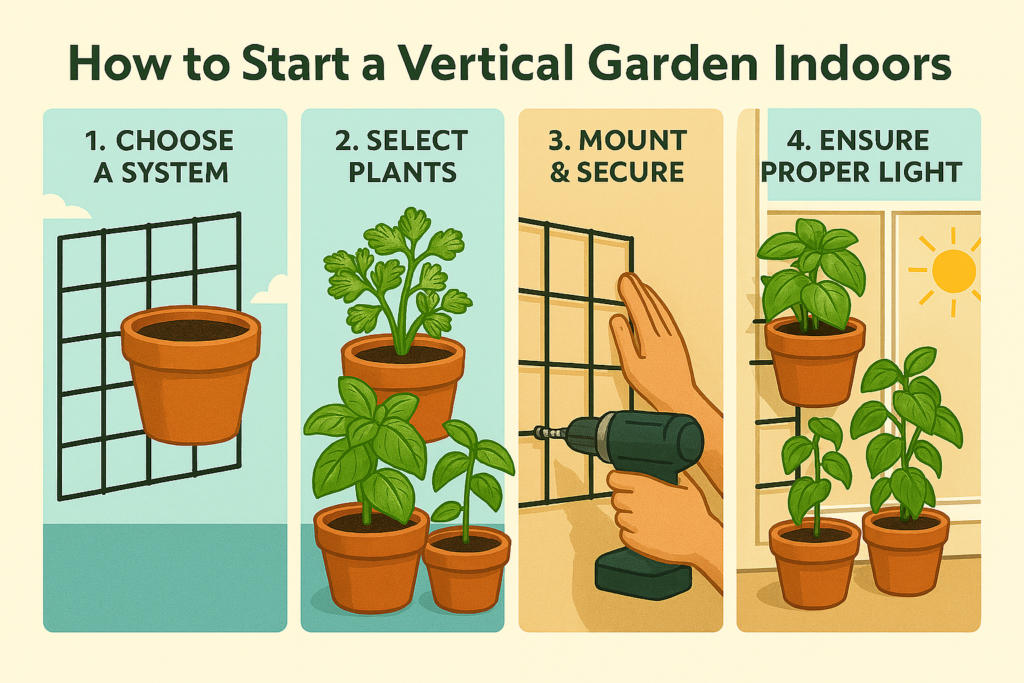
Picking the right plants when you’re figuring out how to start a vertical garden indoors makes all the difference in your success. I always tell beginners to start with herbs because they’re practically foolproof and you’ll actually use them in your cooking!
Basil is my number one recommendation because it grows incredibly fast and loves being pinched for harvesting. I grow three different varieties in my kitchen vertical garden, and I use them constantly. Mint is another winner, though fair warning – it grows like crazy, so give it its own pocket or it’ll take over everything else.
For leafy greens, lettuce and spinach are perfect choices. They don’t need deep roots, so they’re ideal for shallow vertical planters. I love having fresh salad greens right in my kitchen, especially during Florida’s hot summers when store-bought lettuce wilts so quickly.
If you want some trailing plants for visual interest, pothos and philodendrons are absolutely gorgeous. They’ll cascade down from your vertical garden and create this lush, jungle-like feeling. University extension offices often have great guides about which houseplants work best indoors.
Setting Up Your Vertical Garden Indoors Successfully
The setup process for how to start a vertical garden indoors is actually pretty straightforward once you know what you’re doing. Location is everything – you need a spot that gets good light but isn’t right next to a heat source like a radiator or air conditioning vent.
I learned this the hard way when I first mounted my herb garden right next to my kitchen window that gets blazing afternoon sun. Half my plants got scorched! Now I choose spots with bright, indirect light, and my plants are much happier.
Make sure your wall can support the weight of your garden when it’s fully watered. Soil gets heavy when wet, and I’ve seen people’s vertical gardens come crashing down because they didn’t use proper wall anchors. Use sturdy brackets and don’t skip this step – trust me on this one.
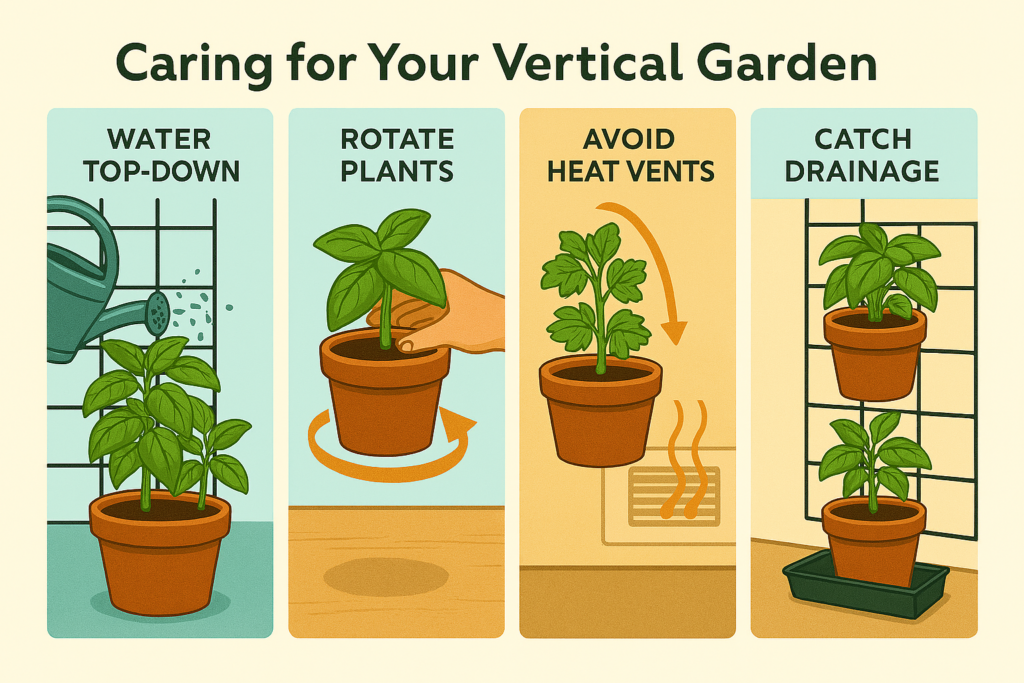
Drainage is absolutely critical for success. Every single planter needs holes in the bottom, or your plants will get root rot and die. I put a plastic tray underneath to catch excess water, which also makes watering much easier and protects your floors.
Caring for Your Indoor Vertical Garden
Once your vertical garden is set up, the daily care is actually easier than traditional container gardening. I check my plants every morning while I’m making coffee, and it’s become this lovely little routine that starts my day off right.
Watering is the trickiest part because gravity makes water flow down to the bottom plants. I always start watering at the top and work my way down, giving each level just enough water to moisten the soil. The plants at the bottom usually need less water because they get some runoff from above.
Light can be uneven in vertical setups, so I rotate my plants every few weeks to make sure everyone gets their fair share. The top plants usually get more light, so I put my sun-loving herbs up there and shade-tolerant greens toward the bottom.
Fertilizing is super simple with liquid fertilizer mixed into your watering can. I use a diluted solution every two weeks, and my plants stay healthy and productive. The USDA has excellent resources about urban gardening techniques that work great for vertical systems too.
Starting a vertical garden indoors has been one of my favorite gardening adventures, and I know you’ll love it too. The fresh herbs and greens taste amazing, and there’s something so satisfying about harvesting your own food right from your kitchen wall.
Don’t worry if your first attempt isn’t perfect – mine certainly wasn’t! With a little patience and these tips for how to start a vertical garden indoors, you’ll be growing successfully in no time.
