

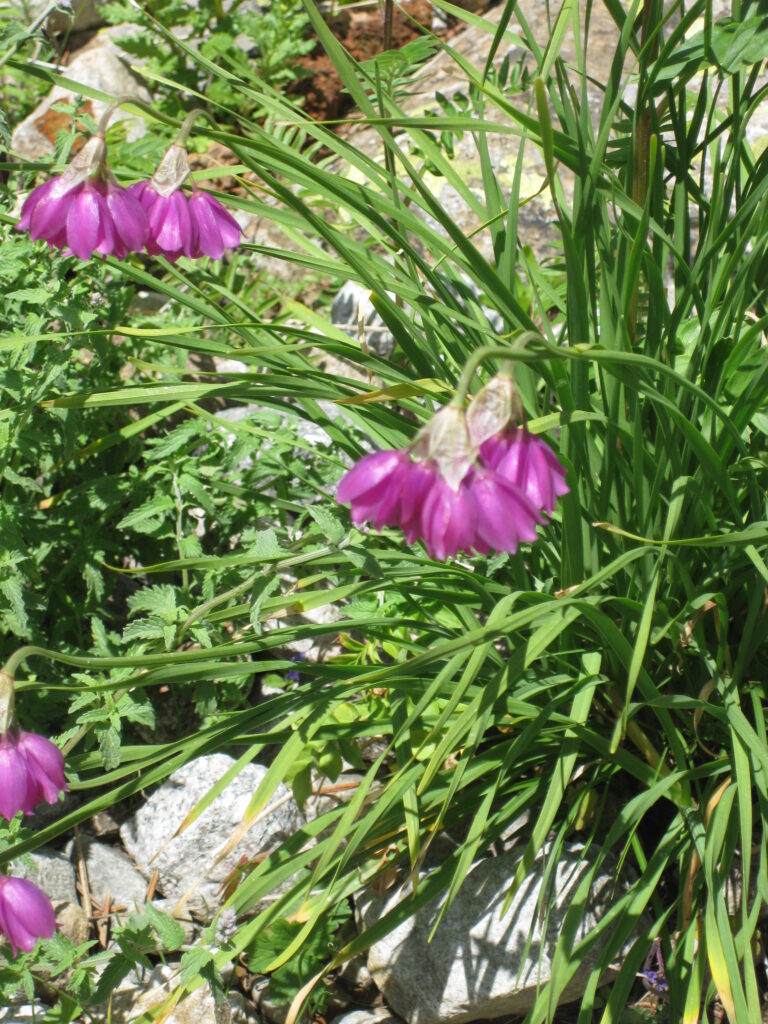
Learning how to grow Allium Insubricum opens up a world of gorgeous purple blooms in your garden! This lesser-known member of the allium family produces stunning spherical flower heads that look like purple fireworks. I discovered this beauty a few years ago and fell in love with its unique charm. How to Grow Allium Insubricum is a popular choice for gardeners.
Unlike its more famous cousins like giant alliums, Allium Insubricum stays more compact while still delivering that wow factor. The flowers emerge in late spring to early summer, creating perfect purple globes that pollinators absolutely adore. It’s one of those plants that makes visitors stop and ask, “What is that beautiful flower?”
Understanding Allium Insubricum Growing Requirements
When I first started learning how to grow Allium Insubricum, I quickly realized it has some specific needs that differ from other bulbs. This alpine native originally comes from the mountains of northern Italy, which gives us clues about what it loves. It prefers well-draining soil that never stays soggy, especially during its dormant period.
The bulbs need a cold winter chill to bloom properly, which can be tricky here in Florida. I’ve had the best success treating them as annuals or providing artificial chilling in the refrigerator for 12-16 weeks before planting. Plant the bulbs in fall, about 3-4 inches deep and 4-6 inches apart.
Full sun to partial shade works well, though I’ve noticed they bloom better with at least 6 hours of direct sunlight daily. The soil pH should be slightly alkaline, around 6.5-7.5, which you can achieve by adding some lime if your soil tends to be acidic. Good drainage is absolutely critical because these bulbs will rot in waterlogged conditions.
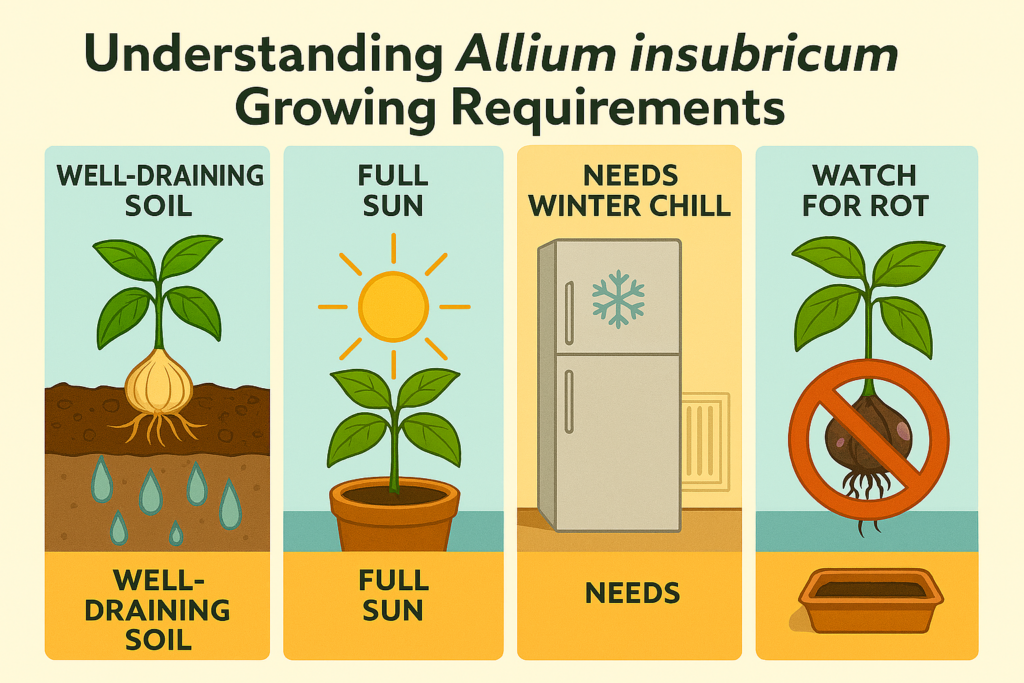
In warmer climates like ours, choose the coolest, most well-draining spot in your garden. I plant mine in raised beds or containers where I can control the soil conditions better. The key is mimicking their mountain home environment as much as possible.
Planting and Care Tips for Allium Insubricum Success
Related article: How to Get Rid of Aphids on Tomato Plants Naturally
The secret to successfully growing Allium Insubricum lies in timing and soil preparation. I always plant my bulbs in late December or January here in Florida, after they’ve had their cold treatment. This gives them the best chance to establish roots before our heat kicks in.
Prepare your planting area by mixing in plenty of coarse sand or perlite to improve drainage. I also add a handful of bone meal to each planting hole because alliums are heavy feeders. Water thoroughly after planting, then back off on the watering until you see green shoots emerging.
During the growing season, keep the soil consistently moist but never waterlogged. I water deeply once or twice a week, depending on rainfall. The plants appreciate regular feeding with a balanced fertilizer every 3-4 weeks while they’re actively growing.
One mistake I made early on was cutting back the foliage too soon after blooming. Let those leaves stay until they naturally yellow and die back, usually 6-8 weeks after flowering. The bulb needs that time to store energy for next year’s display.
How to Grow Allium Insubricum in Containers
Container growing is actually my preferred method for Allium Insubricum, especially in warm climates. It gives you complete control over soil conditions and makes the cold treatment process much easier. I use pots that are at least 8-10 inches deep with excellent drainage holes.
My go-to container mix includes equal parts quality potting soil, coarse sand, and perlite. This creates the fast-draining environment these bulbs crave. Plant 3-5 bulbs per 12-inch pot for a nice full display, spacing them about 3 inches apart.
The beauty of container growing is mobility. During our hot Florida summers, I can move the pots to a shadier location once the foliage starts declining. This helps extend the bulb’s life and reduces stress from extreme heat.
Water container plants more frequently than ground-planted bulbs, but still allow the soil to dry slightly between waterings. I check daily during active growth and adjust based on weather conditions. Container bulb growing requires more attention but offers greater success in challenging climates.
Troubleshooting Common Growing Challenges
Even experienced gardeners face challenges when growing specialty bulbs like Allium Insubricum. The most common problem I encounter is bulb rot, usually caused by poor drainage or overwatering. If you notice soft, mushy bulbs, improve drainage immediately and reduce watering frequency.
Another issue is failure to bloom, which often stems from insufficient cold treatment or planting bulbs that are too small. Always buy the largest, firmest bulbs you can find from reputable suppliers. Smaller bulbs may take 2-3 years to reach blooming size.
In hot climates, heat stress can cause premature foliage decline. I combat this by providing afternoon shade during the hottest part of summer and mulching around the plants to keep soil temperatures cooler. A light-colored mulch works better than dark bark in hot areas.
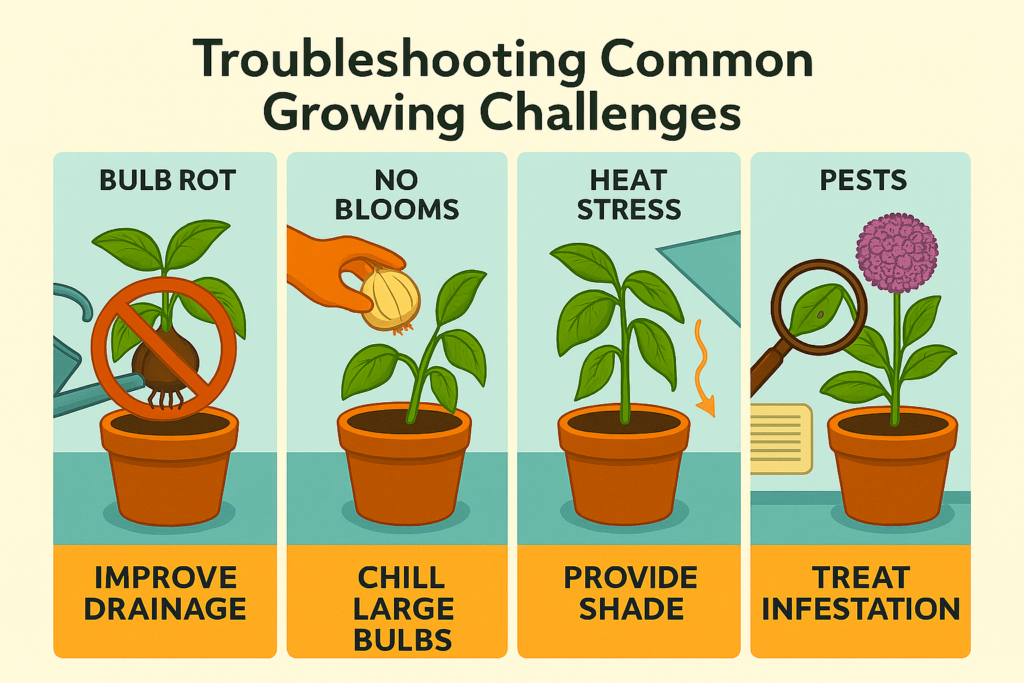
Pest problems are generally minimal, but watch for aphids on new growth and thrips on flowers. Ornamental alliums are typically deer and rodent resistant, which is a nice bonus. If flowering seems weak, try dividing clumps every 3-4 years to prevent overcrowding.
Growing Allium Insubricum successfully takes some patience and attention to detail, but the results are absolutely worth it. Those unique purple flower heads create such a striking focal point in spring gardens. Don’t get discouraged if your first attempt doesn’t go perfectly.
I always encourage gardeners to experiment with different planting locations and care techniques to see what works best in their specific conditions. With practice, you’ll master how to grow Allium Insubricum and enjoy these spectacular blooms year after year!
