

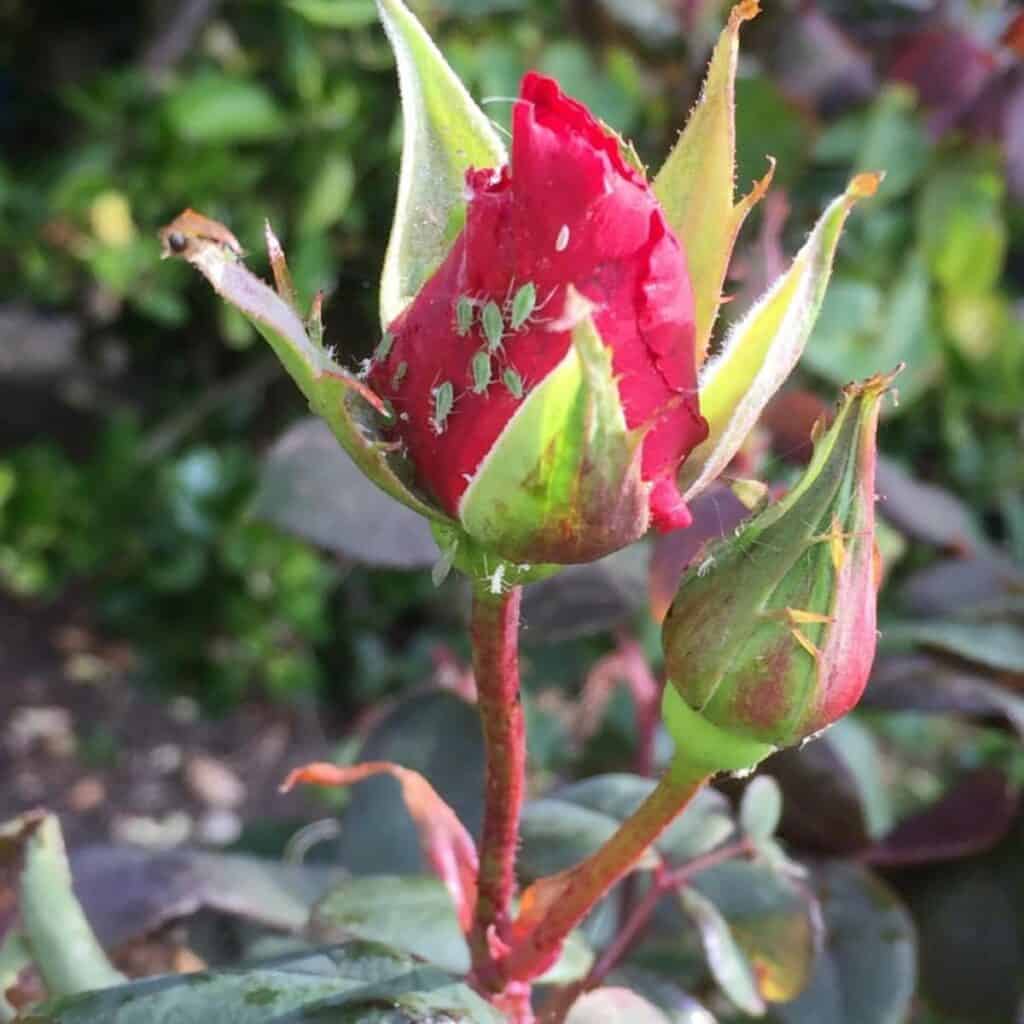
If you’re wondering how to get rid of aphids on roses naturally, you’re not alone! These tiny green pests love to cluster on rose buds and new growth, sucking the life right out of our beautiful plants. I’ve been dealing with aphids on my Florida roses for years, and I’ve learned some fantastic natural methods that actually work. How to Get Rid of Aphids on Roses Naturally is a popular choice for gardeners.
The good news is you don’t need harsh chemicals to win this battle. Natural aphid control is safer for your family, pets, and the beneficial insects that help your garden thrive. Plus, these methods are usually cheaper and easier than store-bought pesticides!
Understanding Aphids and Why They Love Your Roses
Before we dive into how to get rid of aphids on roses naturally, let’s talk about what we’re dealing with. Aphids are those tiny, soft-bodied insects that cluster on rose stems, buds, and the undersides of leaves. They’re usually green, but can also be black, red, or white depending on the species.
These little guys are basically vampires for plants. They pierce the plant tissue with their needle-like mouthparts and suck out the sweet sap. This weakens your roses and can cause leaves to yellow, curl, or drop off entirely.
Here in Florida, our warm, humid climate creates perfect conditions for aphids to multiply quickly. I’ve noticed they’re especially bad in spring when new growth is tender and juicy. They also love stressed plants, so roses that aren’t getting enough water or are planted in poor locations are prime targets.
One telltale sign of aphids is sticky honeydew on leaves and stems. This sweet substance attracts ants and can lead to sooty mold, which makes your roses look terrible. If you see ants marching up and down your rose stems, check for aphids!
Natural Methods to Get Rid of Aphids on Roses
Also read: How to Fix Common Alocasia Problems: Drooping Leaves, Root Rot, and the One Leaf Club
The simplest way to start is with a strong blast of water from your garden hose. I do this in the morning so the plants have time to dry before evening. Spray the undersides of leaves where aphids like to hide. This method works great for light infestations and doesn’t harm beneficial insects.
Insecticidal soap is my go-to natural solution for stubborn aphid problems. You can buy it or make your own by mixing a few drops of mild dish soap with water in a spray bottle. I spray this directly on the aphids, making sure to coat them thoroughly. The soap suffocates them without harming your roses.
Neem oil is another fantastic natural option that I’ve had great success with. It’s derived from the neem tree and works by disrupting the aphids’ life cycle. Mix it according to package directions and spray in the evening to avoid leaf burn. University extension services often recommend neem oil as a safe, effective treatment for aphids.
For a homemade spray that aphids absolutely hate, I mix garlic and hot pepper with water. Blend a few cloves of garlic and a hot pepper with water, strain it, and spray on affected areas. The smell might be strong, but it really works to repel these pests!
Encouraging Natural Predators to Control Aphids
One of my favorite long-term strategies for natural aphid control is attracting beneficial insects to my garden. Ladybugs are aphid-eating machines! A single ladybug can eat up to 50 aphids per day. I plant sweet alyssum, dill, and fennel nearby to attract them.
Lacewings are another aphid predator that I love having in my garden. Their larvae are particularly voracious, earning them the nickname “aphid lions.” Adult lacewings are attracted to plants like cosmos, coreopsis, and angelica.
Birds can also help with aphid control, especially small songbirds like wrens and chickadees. I keep a bird bath near my rose garden and plant native shrubs to provide nesting spots. It’s amazing how much these little helpers can reduce pest populations naturally.
Don’t forget about beneficial wasps! Before you panic, these aren’t the stinging kind. Parasitic wasps lay their eggs inside aphids, and the developing larvae kill the pest from the inside. You can attract them with small-flowered plants like yarrow and Queen Anne’s lace.
Prevention Tips for Long-Term Rose Health
The best defense against aphids is keeping your roses healthy and strong. I make sure my roses get consistent water, especially during our hot Florida summers. Stressed plants are aphid magnets, so proper irrigation is key.
Good air circulation around your roses helps prevent many pest problems, including aphids. I space my roses properly and prune them to open up the center of the plant. This also makes it easier to spot problems early when they’re easier to treat.
Companion planting has worked wonders in my garden for natural pest control. I plant marigolds, chives, and catnip around my roses because aphids dislike their strong scents. The USDA recognizes companion planting as an effective integrated pest management strategy.
Regular garden cleanup is also important for preventing aphid problems. I remove any fallen leaves or debris where pests might overwinter. In fall, I also inspect my roses carefully and remove any remaining aphids before they can reproduce.
Learning how to get rid of aphids on roses naturally takes some practice, but it’s totally worth it for the health of your garden and family. These methods work best when you catch infestations early, so make checking your roses part of your regular garden routine.
Remember, a few aphids aren’t the end of the world, and natural predators often keep populations in check without any intervention from us. Stay patient, keep trying different natural methods, and you’ll find what works best for your roses and your garden!
