

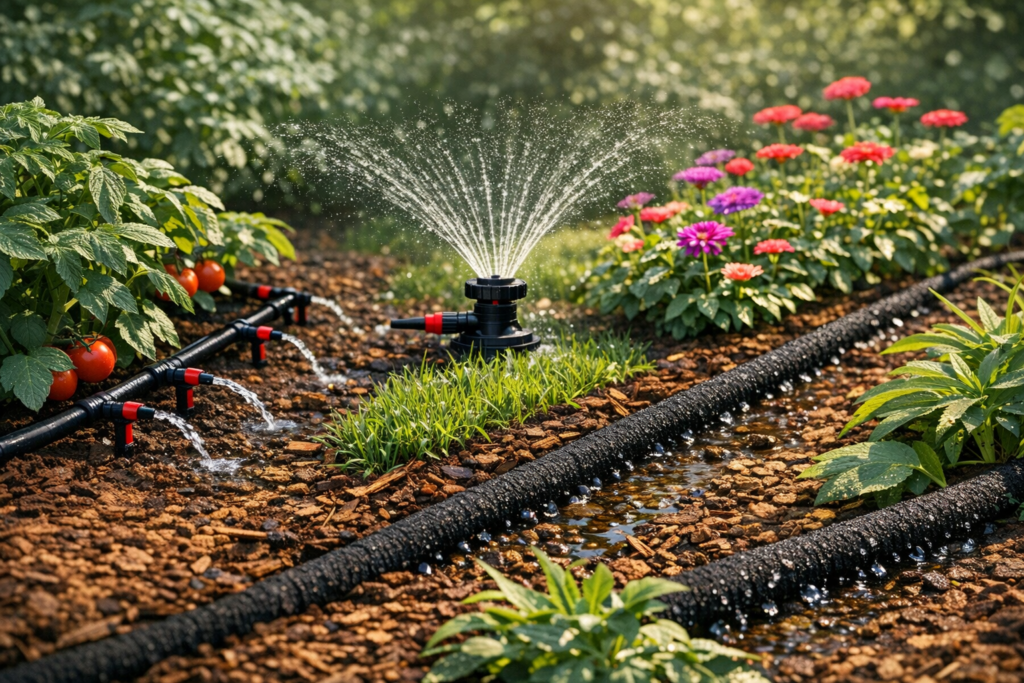
Setting up a DIY garden irrigation system (drip vs sprinkler vs soaker hose) was honestly one of the best decisions I ever made for my Florida garden. I used to spend my evenings dragging hoses around and hand-watering everything, which got old really fast. Now I can water my entire garden with the flip of a switch while I enjoy my morning coffee! Diy Garden Irrigation System (drip Vs Sprinkler Vs Soaker Hose) is a popular choice for gardeners.
The three main types of irrigation systems each have their own strengths and weaknesses. I’ve tried all three over the years, and each one works better for different situations in your garden.
Understanding DIY Garden Irrigation System Options
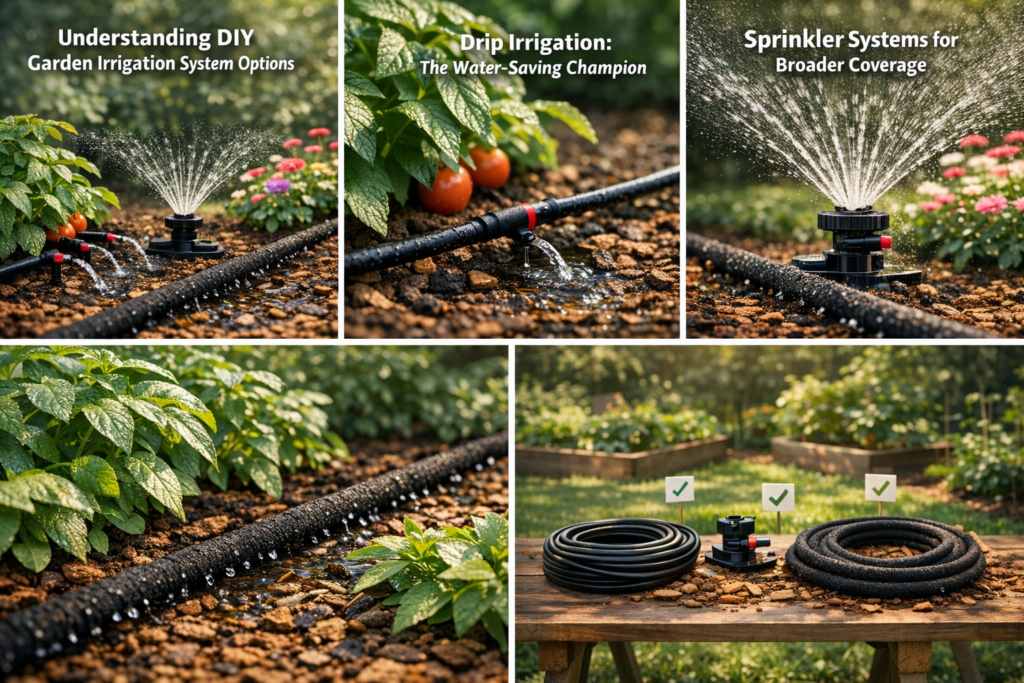
When I first started looking into automatic watering, I was overwhelmed by all the choices. But really, most DIY garden irrigation systems fall into three main categories: drip irrigation, sprinkler systems, and soaker hoses. Each one delivers water differently and works best for specific types of plants and garden layouts.
Drip irrigation systems deliver water slowly and directly to plant roots through small emitters or drip holes. I love these for my vegetable garden because they’re super water-efficient and keep the leaves dry, which helps prevent fungal diseases. The water comes out drop by drop, hence the name!
Sprinkler systems spray water over a wider area, kind of like rain. These work great for lawns and larger garden beds where you want even coverage. I use mini sprinklers in my flower beds and they do a fantastic job keeping everything evenly watered.
Soaker hoses are basically hoses with tiny holes that “weep” water along their entire length. They’re like a cross between drip irrigation and sprinklers. I find them perfect for long rows of plants or curved garden beds where you want consistent moisture along the entire line.
Drip Irrigation: The Water-Saving Champion
Also read: Simple Planter Trellis
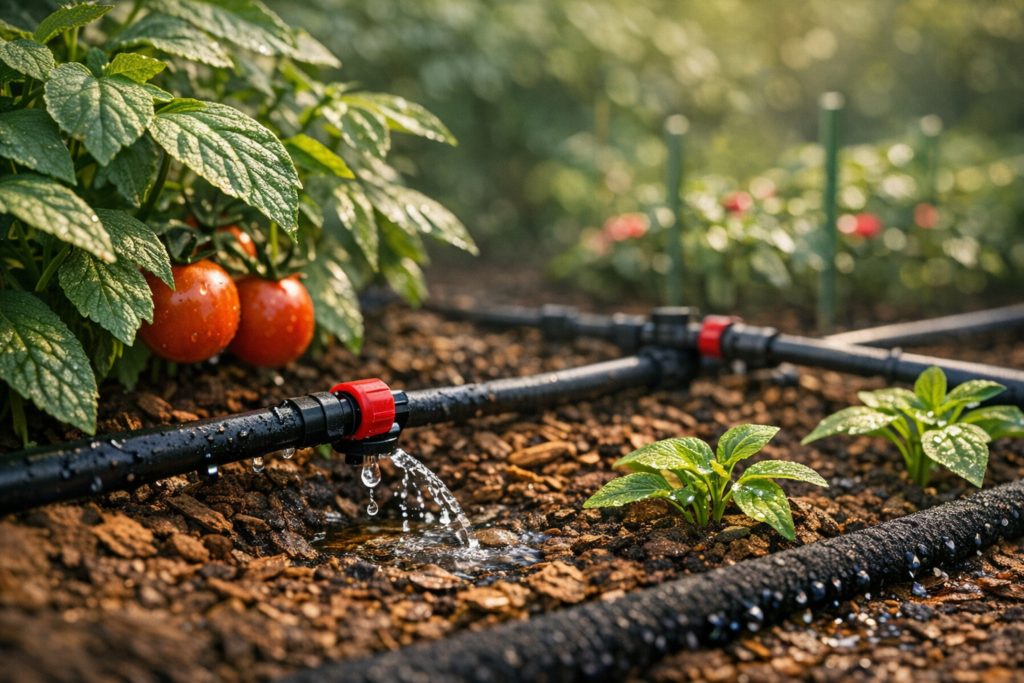
I installed my first drip system about five years ago, and it’s been amazing for water conservation. In Florida’s hot climate, regular sprinklers can lose a lot of water to evaporation, but drip irrigation delivers water right where plants need it most. You can reduce your water usage by up to 50% compared to traditional sprinklers!
Setting up a basic drip system is easier than you might think. You’ll need a main supply line (usually 1/2 inch tubing), smaller distribution lines (1/4 inch tubing), emitters or drip holes, and some basic connectors. I started with a simple kit from the hardware store and expanded from there as I learned what worked best.
The biggest advantage of drip irrigation is precision watering. Each plant gets exactly the amount of water it needs, when it needs it. I have different zones set up for my tomatoes, peppers, and herbs because they all have different water requirements.
One thing to watch out for in Florida is clogging from our hard water and mineral deposits. I learned this the hard way when half my emitters stopped working after a few months. Now I use a simple filter on my main line and flush the system monthly to keep everything flowing smoothly.
Sprinkler Systems for Broader Coverage
Sprinkler systems work best when you need to cover larger areas or when you’re growing plants that like their leaves wet occasionally. I use micro-sprinklers in my annual flower beds and they create this lovely misty environment that my impatiens and begonias absolutely love. It’s like giving them a gentle rain shower!
There are tons of different sprinkler heads available, from tiny misters that cover just a few square feet to larger rotary sprinklers that can water a 20-foot circle. I’ve found that the adjustable ones are worth the extra cost because you can fine-tune the coverage as your plants grow and spread.
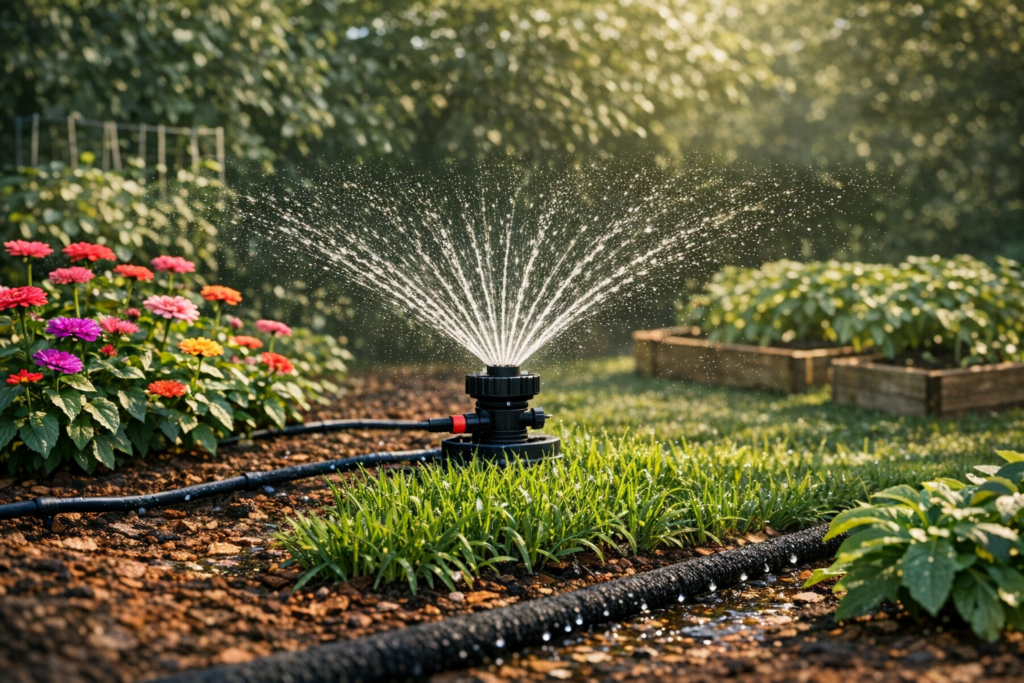
Installation is pretty straightforward if you’re comfortable with basic plumbing. You run your main line where you need it, then attach risers and sprinkler heads at the right spacing. The key is planning your layout carefully so you get even coverage without too much overlap or dry spots.
The downside of sprinklers in Florida is that watering the leaves can sometimes promote fungal problems, especially during our humid summers. University of Florida extension recommends watering early in the morning so leaves have time to dry before evening. I set my timers for 5 AM and it works perfectly!
Soaker Hoses: The Middle Ground Solution
Soaker hoses became my go-to solution for long garden rows and curved beds where drip irrigation seemed too complicated and sprinklers were overkill. They’re basically the easiest DIY garden irrigation system to install because you just lay them out where you want water and connect them to your water source. No special tools or fittings required!
I use soaker hoses along my herb garden border and around my fruit trees. The water seeps out slowly along the entire length, creating a nice moist zone that plant roots love. They work especially well for shallow-rooted plants like lettuce and herbs that need consistent moisture but don’t like being flooded.
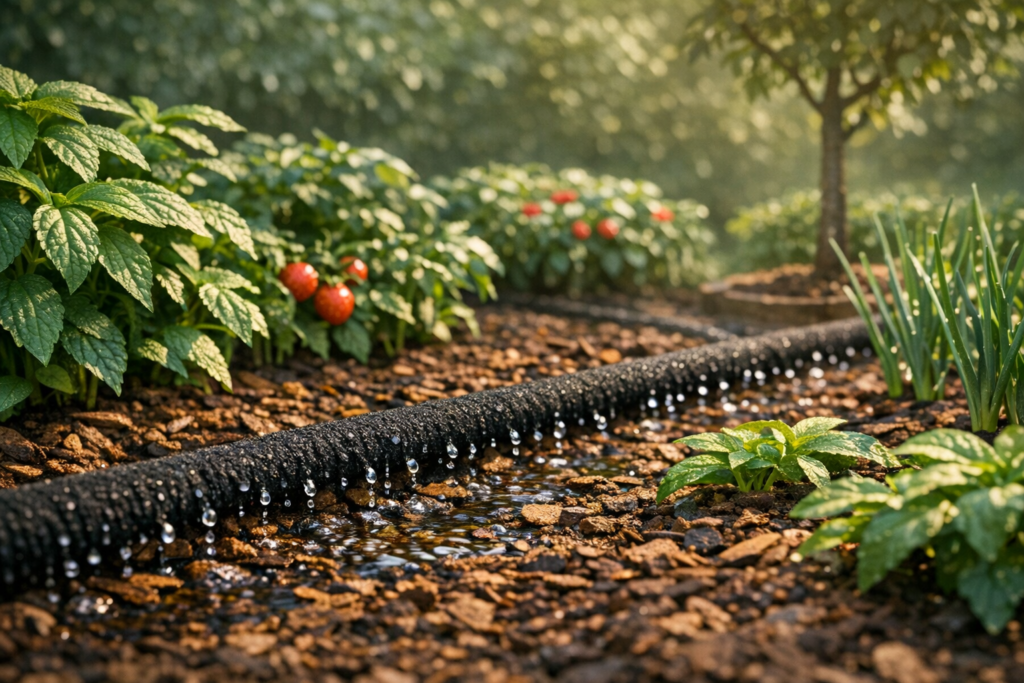
The main thing I’ve learned about soaker hoses is that water pressure matters a lot. Too much pressure and water shoots out like a regular sprinkler. Too little and the far end doesn’t get enough water. I keep my pressure around 10-15 PSI, which gives me nice, even seepage along the whole hose.
One challenge in Florida is that soaker hoses can get brittle from our intense UV rays. I learned to cover mine with mulch or bury them slightly to protect them from sun damage. This also helps reduce evaporation and keeps the water going to the plants instead of disappearing into the air.
Choosing the Right System for Your Garden
After trying all three types, I’ve realized that most gardens benefit from a combination approach rather than just one system. I use drip irrigation for my vegetables and containers, sprinklers for my flower beds and lawn areas, and soaker hoses for my perennial borders and around trees. Each area gets exactly what it needs!
For beginners, I usually recommend starting with soaker hoses because they’re the most forgiving and easiest to install. You can literally have a system running in an hour with just a timer, some hose, and basic connectors. Once you get comfortable with automatic watering, you can always upgrade to more sophisticated systems.
Consider your water source too. If you’re on city water, any of these systems will work great. But if you’re using well water like I am, you might need to add filtration to prevent clogging in drip systems. EPA WaterSense has great information about efficient irrigation practices that can help you choose the best approach for your situation.
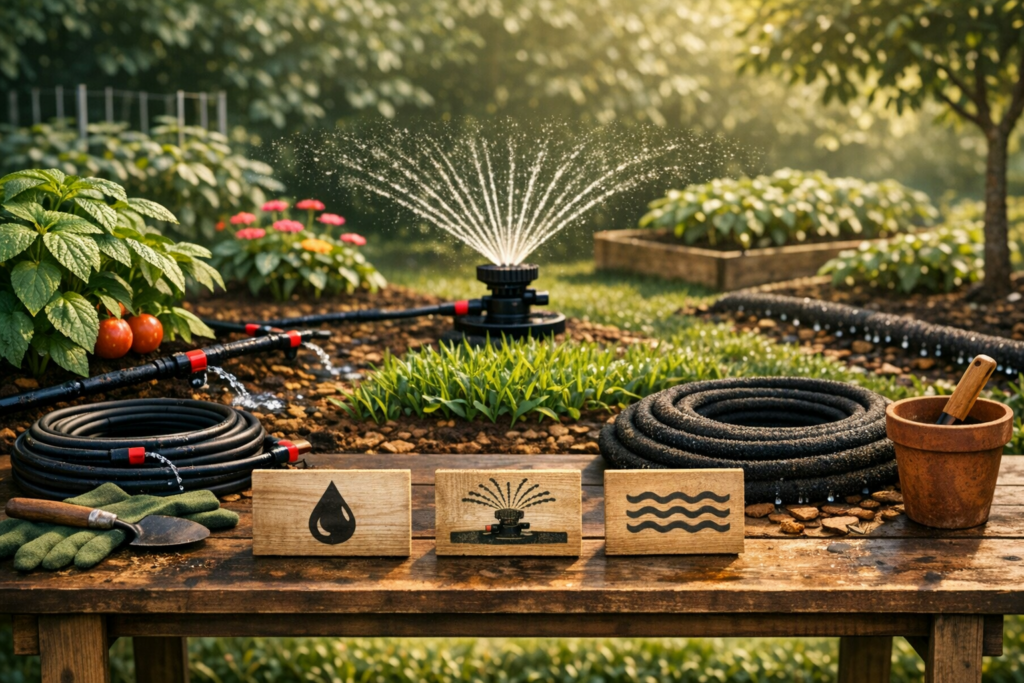
Don’t forget about timers! Even the best DIY garden irrigation system won’t help much if you forget to turn it on. I use simple battery-powered timers that screw right onto my hose connections. They’re game-changers for busy gardeners like me who sometimes get distracted by other projects.
Building your own DIY garden irrigation system (drip vs sprinkler vs soaker hose) doesn’t have to be complicated or expensive. Start small with one area of your garden and expand as you learn what works best for your plants and growing style.
You’ll be amazed at how much time and water you save once you get an automatic system running. Plus, your plants will thank you with better growth and fewer stress-related problems!
